Sustainable Fabrics in Sri Lanka: The Complete Guide for Buyers and Brands
Sri Lanka has a quiet reputation most of the world has not yet noticed: it is one of the few countries where an apparel factory can carry a LEED green building certification and a "Garments Without Guilt" ethical label at the same time. That heritage makes Sri Lanka one of the best-positioned countries in South Asia to lead the shift toward sustainable fabrics, and that shift is already happening faster than most people realize.
Whether you are a local brand hunting for responsible raw materials, a designer building your first eco-conscious collection, or a buyer on Salupata looking for textiles with a smaller footprint, this guide covers everything you need to know.
What Makes a Fabric Truly Sustainable?
A sustainable fabric is not just one that looks "natural." Real sustainability covers the full lifecycle, from the soil the fiber grows in, to the water used in processing, to what happens when the garment is eventually thrown away.
Here is what to look for:
Raw material sourcing: grown without toxic pesticides, synthetic fertilizers, or GMO seeds
Water use: crops that need minimal irrigation, dye processes that recycle water
Chemical processing: non-toxic dyes and finishing agents that do not pollute waterways
Fair labor: fair wages and safe conditions at every stage of the supply chain
End-of-life: biodegradable materials, or fibers that can be recycled back into new yarn
If a supplier or brand cannot speak to most of these points, the "eco" label is probably more marketing than substance.
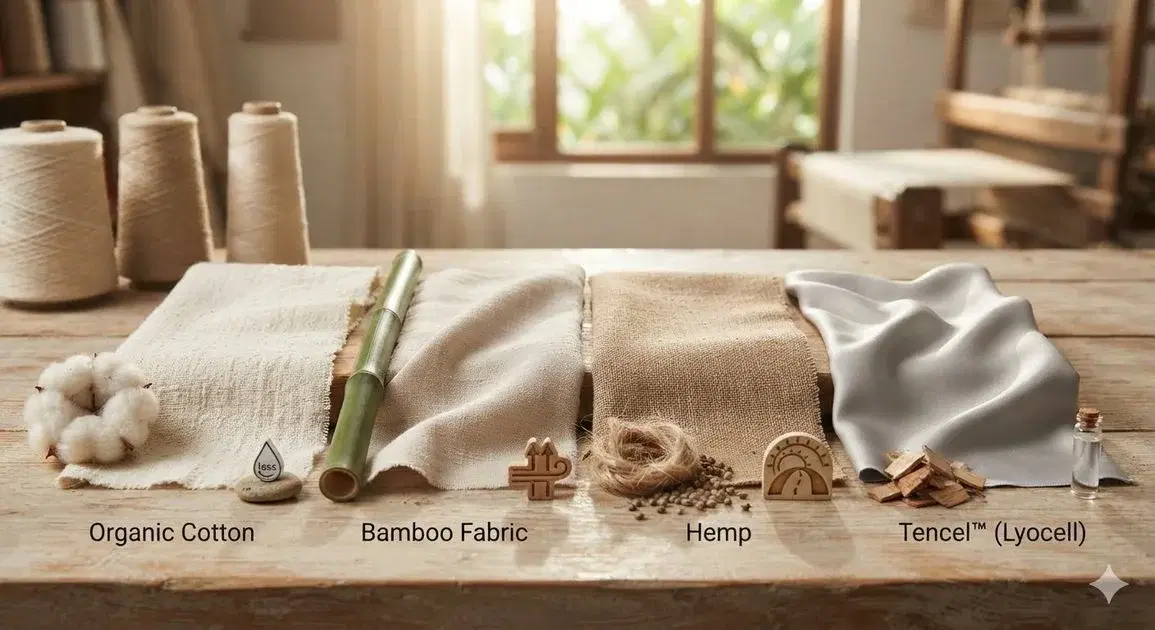
The 4 Best Sustainable Fabrics Available in Sri Lanka
1. Organic Cotton
Conventional cotton is one of the most chemical-intensive crops on earth. Organic cotton flips that equation: grown without synthetic pesticides, it uses up to 90% less water than standard cotton and relies on crop rotation to keep soil healthy.
For Sri Lankan buyers, organic cotton is the most familiar sustainable switch. The feel and workability are nearly identical to conventional cotton, but the reduced chemical burden on farmers, waterways, and end consumers is significant. It is also naturally hypoallergenic, making it ideal for babywear, bedlinen, and skin-contact garments.
Best for: T-shirts, casualwear, babywear, bed and bath textiles
2. Bamboo Fabric
Bamboo grows at a remarkable speed without any pesticides or fertilizers, and its root system actively prevents soil erosion. When processed mechanically, it produces a linen-like fabric. When processed using a responsible closed-loop chemical method, the result is a fabric softer than silk with natural moisture-wicking and antibacterial properties.
In Sri Lanka's hot and humid climate, bamboo is especially practical. Garments stay fresher longer between washes, which also means they last longer. That is a genuine win for both the consumer and the environment.
Best for: Activewear, innerwear, loungewear, summer dresses
3. Hemp
Hemp is the underdog of sustainable textiles, but it arguably has the strongest credentials. It produces two to three times more fiber per acre than cotton, needs virtually no pesticides, and every plant absorbs significant amounts of CO₂ from the atmosphere as it grows.
The resulting fabric is highly durable, naturally UV-resistant, and gets softer with every wash rather than wearing out. For brands building premium, long-lasting pieces, hemp is an excellent choice.
Best for: Workwear, outerwear, bags, canvas goods, denim alternatives
4. Tencel™ (Lyocell)
Tencel is made from wood pulp, usually sustainably harvested eucalyptus, dissolved and spun into fiber through a closed-loop process that recovers over 99% of its water and solvents for reuse. The finished fabric is 100% biodegradable, drapes beautifully, and is gentle enough for sensitive skin.
It has become the go-to fiber for sustainable premium fashion worldwide, and Sri Lankan manufacturers are increasingly offering it as a standard option alongside conventional synthetics.
Best for: Formal and semi-formal wear, blouses, dresses, suiting
Why Sustainable Fabrics Work Especially Well in Sri Lanka's Climate
Most eco-fabrics are naturally suited to tropical conditions in ways synthetic fabrics simply are not:
Breathability: natural fibers allow airflow through the weave, preventing heat buildup during Sri Lankan summers
Moisture management: bamboo and Tencel wick sweat away from the skin faster than polyester
Antibacterial properties: hemp and bamboo resist bacterial growth in humidity, so garments stay fresher longer
UV protection: hemp naturally blocks a high percentage of UV rays, useful in year-round sun
Certifications to Look For When Buying Eco-Friendly Textiles
Greenwashing, the practice of making vague or false environmental claims, is a real problem in the textile industry. When sourcing fabrics on Salupata or from any supplier, these certifications are your best protection:
GOTS (Global Organic Textile Standard)
The gold standard for organic fiber certification. It covers the entire supply chain from raw material to finished product, including social criteria. If a supplier claims organic but cannot show GOTS certification, ask more questions.
OEKO-TEX® Standard 100
Certifies that the fabric has been independently tested for harmful substances and is safe at every stage of production. Many leading Sri Lankan exporters already carry this certification as a baseline.
Bluesign®
Focuses specifically on responsible use of chemicals, water, and energy during manufacturing. A fabric with Bluesign approval has gone through one of the most rigorous chemical management audits in the industry.
How Sri Lankan Brands Can Start Selling Sustainably
Switching to eco-friendly textiles does not have to mean overhauling your entire operation overnight. Here is a practical progression:
Step 1: Start with one category
Pick your bestselling product and run a sustainable version of it. A single organic cotton T-shirt or bamboo loungewear piece lets you test supplier relationships, customer response, and pricing without major risk.
Step 2: Ask for certifications upfront
When browsing the Fabrics & Raw Materials section on Salupata, filter by suppliers who list their certifications. A credible eco-fabric supplier should be able to provide documentation without hesitation.
Step 3: Design for longevity
Sustainable fabrics paired with a fast-fashion design philosophy is a contradiction. Use timeless silhouettes, avoid mixed-fiber blends that are difficult to recycle, and choose natural or low-impact dyes wherever possible.
Step 4: Tell the story
Consumers in Sri Lanka are increasingly curious about where their clothing comes from. Share your supplier's story, the certifications behind your fabric, and the water or chemical savings your choice represents. Transparency is your most powerful marketing tool.
Step 5: Explore zero-waste cutting
Fabric offcuts from pattern cutting are one of the biggest sources of textile waste. Zero-waste cutting techniques, or partnerships with makers who upcycle scraps, can significantly reduce your environmental footprint even before you change a single fiber.
Frequently Asked Questions
Is organic cotton more expensive than conventional cotton in Sri Lanka?
It typically costs 20 to 40% more at the raw material level, but the price gap narrows considerably when you factor in the premium pricing sustainable garments command in both local and export markets.
Where can I buy sustainable fabrics in Sri Lanka?
Salupata's Fabrics & Raw Materials category lists local suppliers across fabric types. Filter by material type and look for sellers who specify certifications like GOTS or OEKO-TEX in their listings.
Is bamboo fabric actually eco-friendly?
It depends on the processing method. Mechanically processed bamboo linen is fully eco-friendly. Bamboo viscose is eco-friendly only when the supplier uses a certified closed-loop chemical process. Always ask the supplier which method they use.
What certification should I prioritize if I can only require one from my supplier?
GOTS for organic fiber products. OEKO-TEX® Standard 100 if you are sourcing processed or blended fabrics where organic certification is not available.
Are sustainable fabrics durable enough for daily wear?
Yes. Hemp and Tencel in particular are known for durability. Hemp softens and strengthens with washing, while Tencel maintains its shape significantly better than conventional viscose over time.
The Bottom Line
The move toward sustainable fabrics in Sri Lanka is not a trend with an expiration date. It is a structural shift driven by export market requirements, consumer awareness, and the growing cost of environmental inaction. The good news is that the materials, suppliers, and certifications are already here.
If you are a brand, the question is no longer whether to adopt eco-friendly textiles. It is where to start. Browse sustainable fabric listings on Salupata to find certified local suppliers and begin building your first responsible collection today.