Best Fabrics for Sri Lanka's Hot, Humid Weather
Sri Lanka gives you beaches, tea country, and temperatures that sit between 27°C and 32°C for most of the year. It also gives you humidity above 75 percent, and that is the part that catches people out. Dry heat is manageable. Heat plus wet air is what makes a shirt cling to your back by nine in the morning.
If you are putting together a wardrobe, sourcing for a collection, or manufacturing for the local market, fabric choice matters more than cut. Here is what actually works in this climate, and why.
Why humidity changes everything
In dry heat, sweat evaporates off your skin and cools you down. That is the system working as designed. In humid air, there is already so much moisture floating around that evaporation slows to a crawl, so the sweat just sits there.
A fabric for tropical weather therefore has two jobs:
Breathability, so air moves through the weave and reaches your skin
Moisture handling, so sweat is pulled off your body and released into the air instead of held against it
Every fibre below is judged on those two things.
Cotton: the everyday workhorse
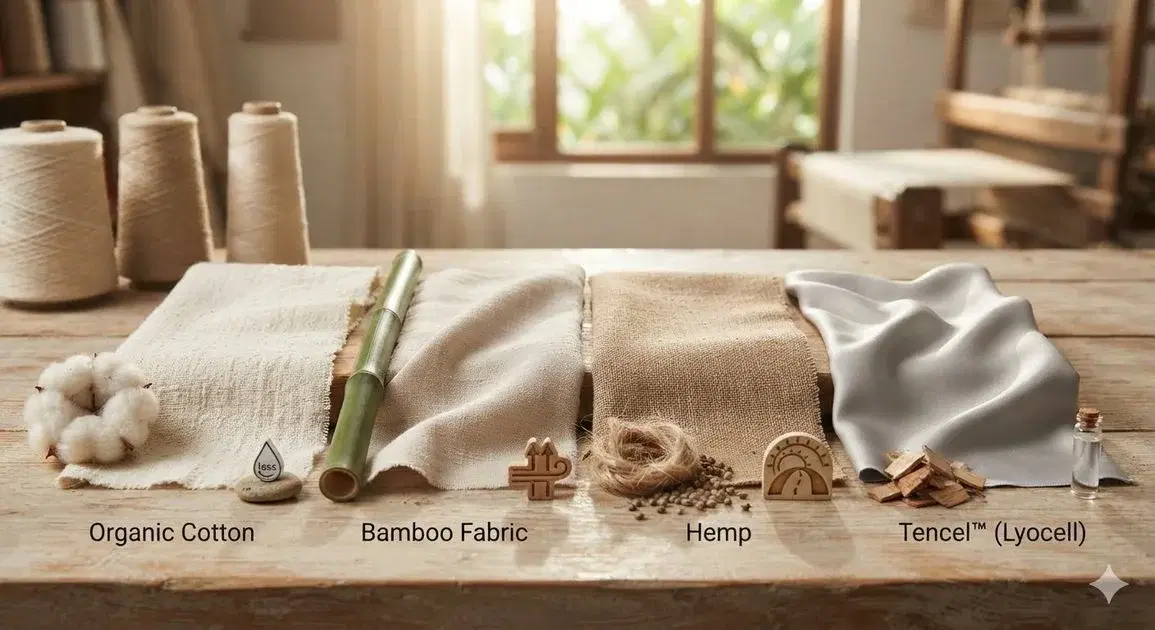
Cotton is the default for a reason. The fibres have a natural twist, which leaves gaps for air to move through, and they absorb sweat readily instead of letting it pool on your skin.
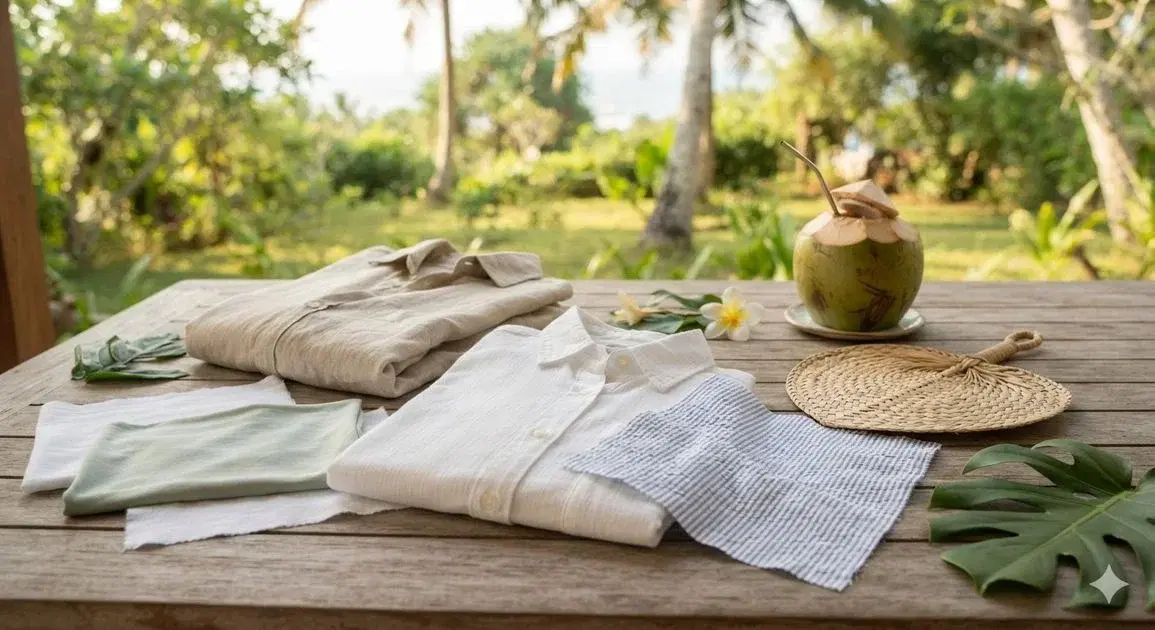
The weave matters as much as the fibre. Poplin, voile, chambray, and seersucker all stay light and airy. Seersucker deserves a special mention for Sri Lankan conditions: the puckered surface holds the cloth slightly off your skin, so air keeps circulating even when you are standing still in the sun.
Linen and cotton-linen blends
Linen comes from the flax plant and has been the hot-weather fabric of choice for a few thousand years. The fibres are hollow, so they soak up a lot of moisture before they feel damp, and they dry fast. Linen is also stiff enough that it stands away from the body rather than sticking to it.
The catch is creasing. Linen wrinkles if you look at it wrong. That is why cotton-linen blends have become so popular: you keep most of the crispness and airflow, and gain softness and a garment that survives a day at the office in Colombo without looking slept in.
Bamboo: soft, cool, and odour-resistant
Bamboo has taken off in sustainable fashion, and it suits this climate well. The fabric is unusually soft, closer to silk than to cotton, and the fibre structure has micro-gaps that help with both ventilation and absorption. Bamboo can hold around three times its weight in water and pulls sweat away faster than cotton does.
It also has natural antibacterial properties, which matters more than you would think when your clothes are damp for half the day. Less odour, fewer washes, longer life.
Rayon, modal, and lyocell
These are semi-synthetics, made from wood pulp that has been chemically processed. Because they start out as plant cellulose, they breathe far better than true synthetics and do not trap heat the same way.
Rayon drapes beautifully and feels cool to the touch, which makes it a natural fit for maxi dresses, wide-leg trousers, and resort wear. If you have a choice, go with lyocell, sold as Tencel. It handles moisture better than standard viscose and is produced in a closed-loop process that recovers most of the solvent.
When synthetics actually win
Polyester, nylon, and acrylic are, in ordinary daily wear, a bad idea here. They are plastics. They repel water and hold heat, and by mid-afternoon you are wearing a sauna.
There is one real exception: performance activewear. If you are hiking the Knuckles range or training in the evening, cotton turns against you. It soaks up sweat and keeps it, so the garment gets heavy, cold, and starts to chafe. Engineered synthetics move moisture to the outer surface of the fabric where it can evaporate. For anything athletic, a purpose-built moisture-wicking polyester or nylon blend beats natural fibres outright.
GSM: the number that decides how hot you feel
Picking the right fibre is only half of it. Fabric weight is measured in GSM, grams per square metre, and a 100 percent cotton shirt at the wrong GSM will still cook you.
100 to 150 GSM. Sheer blouses, light summer dresses, beach cover-ups. Airy, but check opacity before you commit.
150 to 180 GSM. The sweet spot for tropical daily wear. Breathable and still opaque enough for T-shirts, button-downs, and skirts.
200 GSM and above. Structured trousers, denim, light jackets. Save these for the hill country, where Nuwara Eliya evenings genuinely get cold.
If you are sourcing rather than shopping, GSM is the single most useful number to filter on. It tells you more about how a garment will wear than the fibre name alone.
Looking after fabric in a humid climate
Humid weather means washing more often, which wears fabric out faster. Two habits make a real difference.
Go easy on fabric softener. Liquid softeners coat the fibres in a waxy film. The cloth feels lovely and breathes noticeably worse, which defeats the entire point of buying cotton or bamboo in the first place.
Dry in the shade. Equatorial sun bleaches colour out of fabric fast and weakens linen and silk fibres. A shaded, well-ventilated spot dries clothes almost as quickly and adds years to them.
Common questions
What is the coolest fabric for Sri Lankan weather?
Lightweight linen and bamboo are the two strongest performers. Linen wins on airflow because it holds its shape away from the skin. Bamboo wins on softness and odour control. A cotton-linen blend at around 160 GSM is the most practical compromise for everyday wear.
Is polyester ever a good idea in the tropics?
Only for sport. Purpose-made moisture-wicking polyester outperforms cotton during exercise. For office wear, casual wear, or anything you will sit in for hours, avoid it.
What GSM should I look for in a tropical shirt?
Aim for 150 to 180 GSM. Below that you start running into opacity problems, above it the fabric begins to hold heat.
The short version
Work with the climate instead of against it. Stick to cotton, linen, bamboo, and lyocell for daily wear, keep synthetics for the gym, and check the GSM before you check anything else. Get those three right and the heat stops being something you have to endure.
Salupata connects buyers and manufacturers with fabric suppliers across Sri Lanka, so you can filter by composition and GSM and find material that suits the weather you are actually dressing for.