How to Start Your Own Clothing Brand in Sri Lanka: A 10-Step Guide
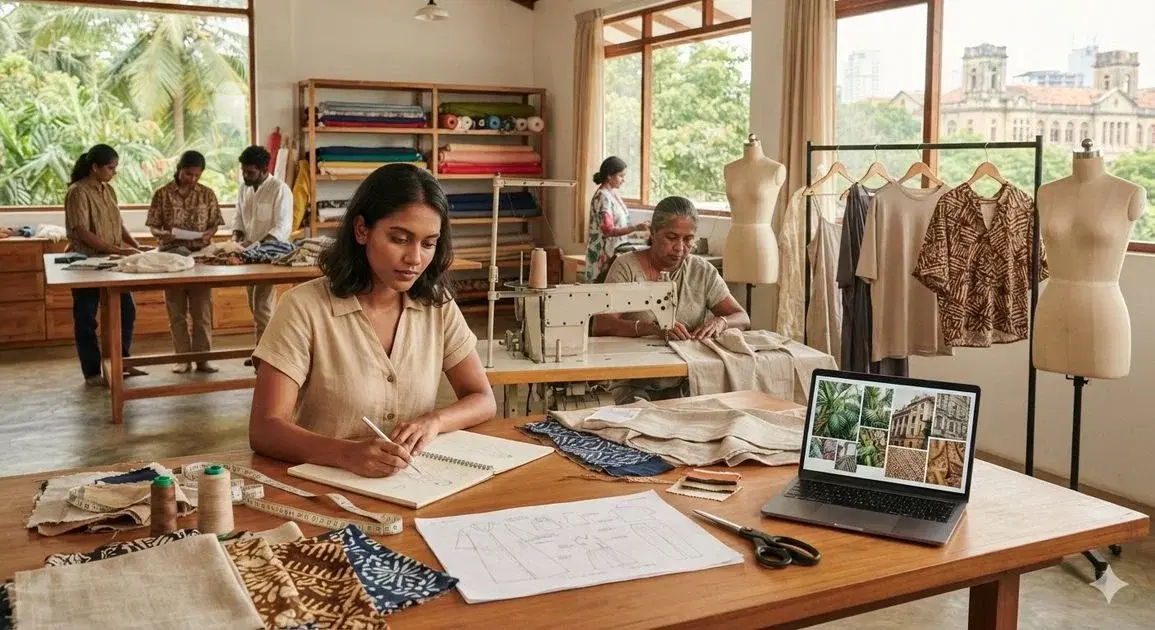
Walk into almost any wardrobe in Europe or the US and you'll find a label that says Made in Sri Lanka. We've been sewing for the world's biggest brands for decades. What's changed recently is that the people who know how that industry works are starting their own labels instead of only supplying other people's.
You can see it on Instagram every week. A linen resort wear line out of Galle, a batik collection reworked for twenty-somethings, an activewear brand run out of a single room in Nugegoda. The infrastructure that used to be reserved for export orders of 50,000 pieces is now open to someone ordering 100.
Here's how to get from an idea to a launched brand, in the order the work actually happens.
Contents
Find your idea and niche
Design and tech packs
Sourcing fabrics and materials
Finding the right factories and workshops
Printing and decoration
The sampling process
Branding, tags and care labels
Pricing your products
Marketing and selling channels
Registration, compliance and launch
Step 1: Find Your Idea and Niche
The fastest way to fail is to launch "nice clothes for everyone." The brands that survive their first year are the ones that can finish this sentence in one line: I make ___ for ___.
Linen office wear for Colombo professionals who sit in air conditioning all day. Oversized tees for the Gen-Z streetwear crowd. Modern cuts built on traditional batik or beeralu lace, crafts that are genuinely ours and genuinely hard to copy abroad.
Spend a weekend on research before you spend a rupee. Walk through Odel, Cotton Collection and a few Instagram boutiques. Note what's oversupplied and what you keep failing to find. Ask five people in your target group what they gave up looking for last month. That gap is your brief.
Step 2: Design and Tech Packs
You don't need a fashion degree. You do need to communicate your idea clearly enough that a factory can build it without calling you every day.
Start with sketches and a mood board. If drawing isn't your thing, work with a freelance designer or a fresh graduate from AOD or the University of Moratuwa. A first collection's worth of flats is usually affordable at that level.
Then build a tech pack. It's the blueprint the factory works from, and it covers:
Flat sketches, front and back
A measurement chart for every size
Fabric type and weight. This is where GSM matters; "cotton tee" means nothing to a factory, "180 GSM single jersey" means one specific thing
Stitch types, seam finishes and thread colours
Trim and label placement
A bill of materials
A vague tech pack is the most expensive document in fashion. Every question the factory has to guess at becomes a sample you pay for twice.
Step 3: Sourcing Fabrics and Materials
For years this meant a full day in Pettah or Pamunuwa, walking shop to shop in the heat, and settling for whatever happened to be in stock that morning. Plenty of brands still do it, and there's something to be said for feeling fabric with your hands.
The problem is repeatability. If your second production run can't get the same cloth as the first, your customers notice before you do.
Sourcing digitally fixes that. On Salupata you can browse verified suppliers, compare fabrics and trims, and keep a record of exactly what you bought and from whom, so your second run matches your first.
A few things worth knowing before you buy:
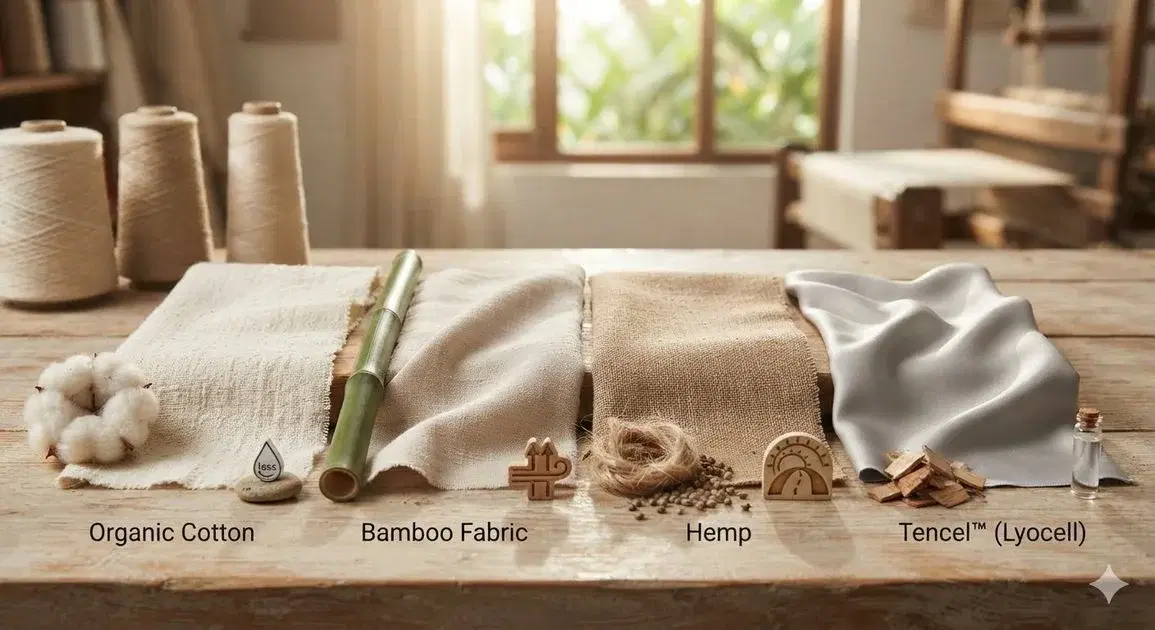
Cotton jersey is the default for tees. Weight decides the feel far more than the price does.
Blends with spandex, usually 3 to 5%, are what make activewear and fitted pieces behave. Too little and it bags out, too much and it never holds a shape.
Linen and linen blends move fastest in the local market for obvious reasons, but they wrinkle, and customers who've never owned linen will treat that as a defect. Say so on the product page.
Always buy a little more than you need. Dye lots vary, and topping up later is rarely a clean match.
Step 4: Finding the Right Factories and Workshops
There are two ways to get your clothes made here:
CMT (Cut, Make, Trim). You supply the fabric and tech pack, the factory cuts and sews. Cheaper per piece and you control material quality, but you're managing the supply chain yourself.
FPP (Full Production Package). The factory sources fabric and delivers finished garments. Simpler and slower to go wrong, but you pay for that and you have less say in materials.
Most first-time brands start with CMT at a small workshop. Expect minimum order quantities somewhere between 50 and 300 pieces per style depending on the factory and the complexity of the garment. Small workshops will often go lower than the big names, and some will go lower still for a style they can sew easily.
When you're choosing, ask about MOQ per colour (not just per style, which catches people out), lead time in working days, what happens to defective pieces, and whether they'll show you a brand they've produced for before. Our Shops Directory lists garment factories, pattern makers and small-batch workshops across the island if you want somewhere to start.
Step 5: Printing and Decoration
If your designs involve graphics, the printing method changes your costs, your minimums and how the garment ages. Three options dominate here:
Screen printing. Cheapest at volume, excellent durability, but you pay per colour and per screen setup. Best above roughly 100 pieces of the same design.
DTF printing. Full colour, no minimum, works on cotton and polyester alike. This is what most small Sri Lankan brands use for short runs and one-offs.
DTG printing. Prints straight into the fabric, so the hand feel is softest. Best on high-cotton garments, and best for detailed artwork at low quantity.
Get a sample printed and wash it ten times before you commit. A print that cracks after three washes will cost you more in returns and reviews than you saved choosing it.
Step 6: The Sampling Process
Never go into bulk production off a drawing. The sample is where your flat sketch becomes something a person wears.
Put it on a fit model who actually represents your customer, not the smallest friend you have. Check how the fabric drapes when they sit down, how the seams hold, whether the sizing matches your chart. Then check it against international sizing, because a Sri Lankan "L" and a UK "L" are not the same garment, and if you sell online you'll be shipping to people who assume they are. Our guide to clothing sizes across countries covers the conversions worth putting on your product pages.
Two or three rounds of sampling is normal. It feels slow and the per-piece cost is painful. It's still far cheaper than 200 unsellable garments sitting in your spare room.
Step 7: Branding, Tags and Care Labels
Branding is what makes a shirt worth more than the cloth it's made of. Name, logo, colours, the voice you write in. Get these settled before the first order, because changing them later means reprinting everything.
The part people skip is labelling. Neck tags, hang tags and care labels are the difference between something that feels like a brand and something that feels like a sample. They're also a legal requirement in most export markets: the label has to state fibre composition and washing instructions.
Those little symbols aren't decoration. Each one means something specific, and getting them wrong invites damaged garments and refund requests. We've broken down what every laundry care symbol means, and you can generate a compliant label for your own garments with our free Care Label Maker.
Step 8: Pricing Your Products
Price too low and you fund your customers' wardrobes out of your own pocket. Price too high without the brand to justify it and nothing moves.
Start with your true cost per piece:
Fabric and trims
Cutting and sewing
Printing or embroidery
Labels, tags and packaging
Transport, both inbound and outbound
Wastage. Assume a few percent of every run is unsellable
That total is your cost of goods. The standard retail multiple in fashion is 2 to 2.5x, and that isn't greed: it has to absorb marketing, platform fees, returns, the pieces that never sell and the discount you'll eventually run on them. If you plan to sell wholesale to boutiques later, you need room for their margin too, which usually means pricing at 4x from the start.
Then sanity-check against the market. Look at what comparable local brands charge for a comparable garment. If you land 40% above them, you need a reason a customer can see in the first three seconds.
Step 9: Marketing and Selling Channels
Where you sell. Direct-to-consumer is the cheapest way to launch:
Your own store on Shopify or WooCommerce. Full control, best margins, but the traffic is entirely your problem.
Marketplaces like Daraz. Existing traffic, lower margins, and you're one thumbnail among thousands.
Social commerce. Instagram and Facebook Shops let people buy without leaving the feed, which is where most discovery happens here.
Don't write off offline. A stall at Good Market, a weekend pop-up in a café, or a small range in a multi-brand boutique will teach you more about your product in two days than a month of analytics.
How you market it. Invest in photography before you invest in ads. A bad photo makes a good garment unsellable, and no ad budget fixes it. Shoot in places that mean something: Colombo's brutalist blocks, the hill country, the southern coast.
Then tell people why you exist. Show the process, show the people sewing the clothes, be specific about what you're trying to do differently. If you want to see what that looks like in practice, the story behind Salupata is our own version of it. And if your angle is ethical production, it helps to know why Sri Lanka's apparel industry has the reputation it does. That's a real advantage, and most local brands never mention it.
Step 10: Registration, Compliance and Launch
Get the legal side done before launch day, not after your first ten orders.
Business Registration (BR). Register as a sole proprietorship, partnership or private limited company through your Divisional Secretariat or the Department of the Registrar of Companies. A sole proprietorship is the quick, cheap route and fine to start with; a PVT LTD costs more and takes longer but protects your personal assets and looks better to suppliers. Either way you need the BR certificate to open a business bank account and to get approved by payment gateways like PayHere or WebXPay.
Export registration. If you're shipping to the diaspora or to international customers, register with the Sri Lanka Export Development Board. They run training programmes and support schemes for SME exporters that most new brands never find out about.
Get into the room. Colombo Fashion Week and the Sri Lanka Design Festival are where suppliers, designers and buyers are all in one place. You'll learn more from one afternoon of conversations than from months of searching online.
Once the paperwork is done and stock is in hand, plan the launch properly: teasers for two weeks, a launch day with a reason to buy now, and the first fifty customers treated like people you'll know for years. Because you might.
Frequently Asked Questions
How much does it cost to start a clothing brand in Sri Lanka?
It depends almost entirely on your first order size. The unavoidable costs are business registration, fabric, sampling, production and labels. Most people underestimate the last three. Get quotes for your specific garment before you commit to anything, because a printed heavyweight hoodie and a plain jersey tee are not remotely the same business.
What is the minimum order quantity for clothing manufacturers in Sri Lanka?
Usually between 50 and 300 pieces per style for small and medium workshops, and often per colour rather than per style. Large export factories start far higher. If you need very low quantities, look for small-batch workshops and DTF printing rather than screen printing.
Do I need a business registration to sell clothing online in Sri Lanka?
You can sell informally through social media, but you'll need a BR to open a business bank account, to get approved by local payment gateways, and to deal with most suppliers and factories on credit terms. Register early. It's not the part worth delaying.
Should I choose CMT or full package manufacturing?
CMT if you care about controlling fabric quality and can manage sourcing yourself. Full package if you'd rather pay more to have one point of contact. Most brands start with full package for the first run and move to CMT once they know what they're doing.
How long does it take to launch a clothing brand?
Realistically three to six months from first sketch to first sale, with sampling being the step that always takes longer than planned. Budget two to three sampling rounds and don't set a launch date until you've approved a final sample.
In Short
Starting a clothing brand here is not glamorous work. It's tech packs, wash tests, and a lot of conversations about seam allowances. But the pieces that used to be out of reach, from fabric and factories to printing, labels and payment, are all available now at quantities a single person can afford.
Pick your niche, draw your first style, and go get a sample made. The rest follows from having something real in your hands.